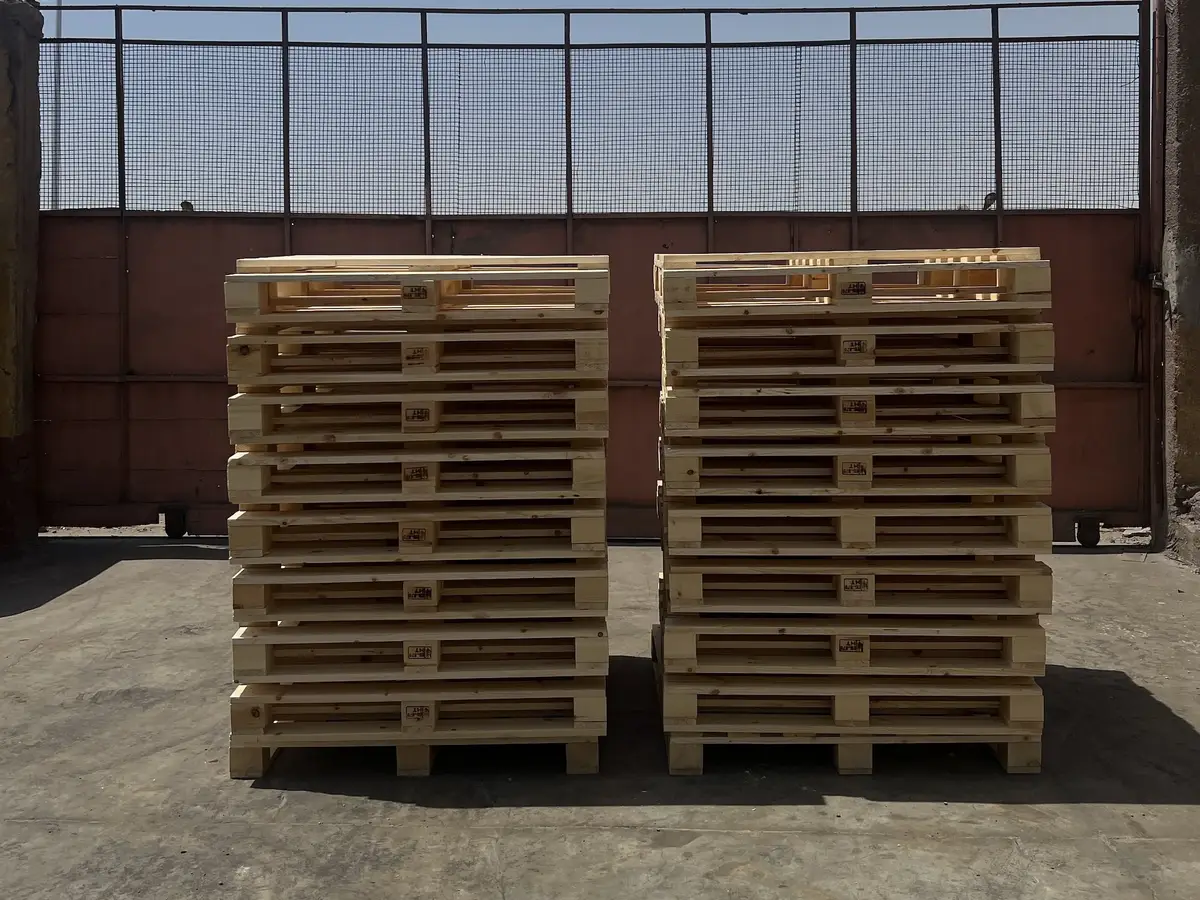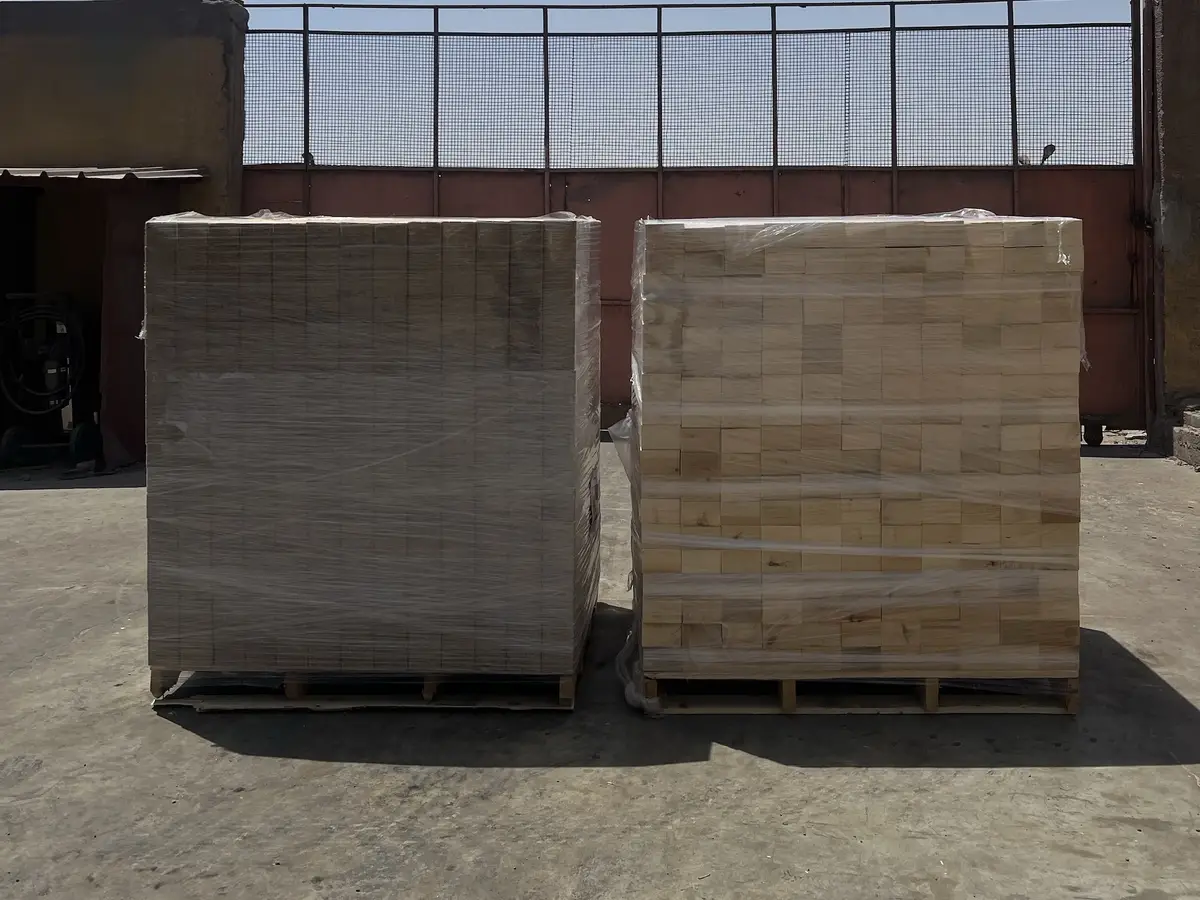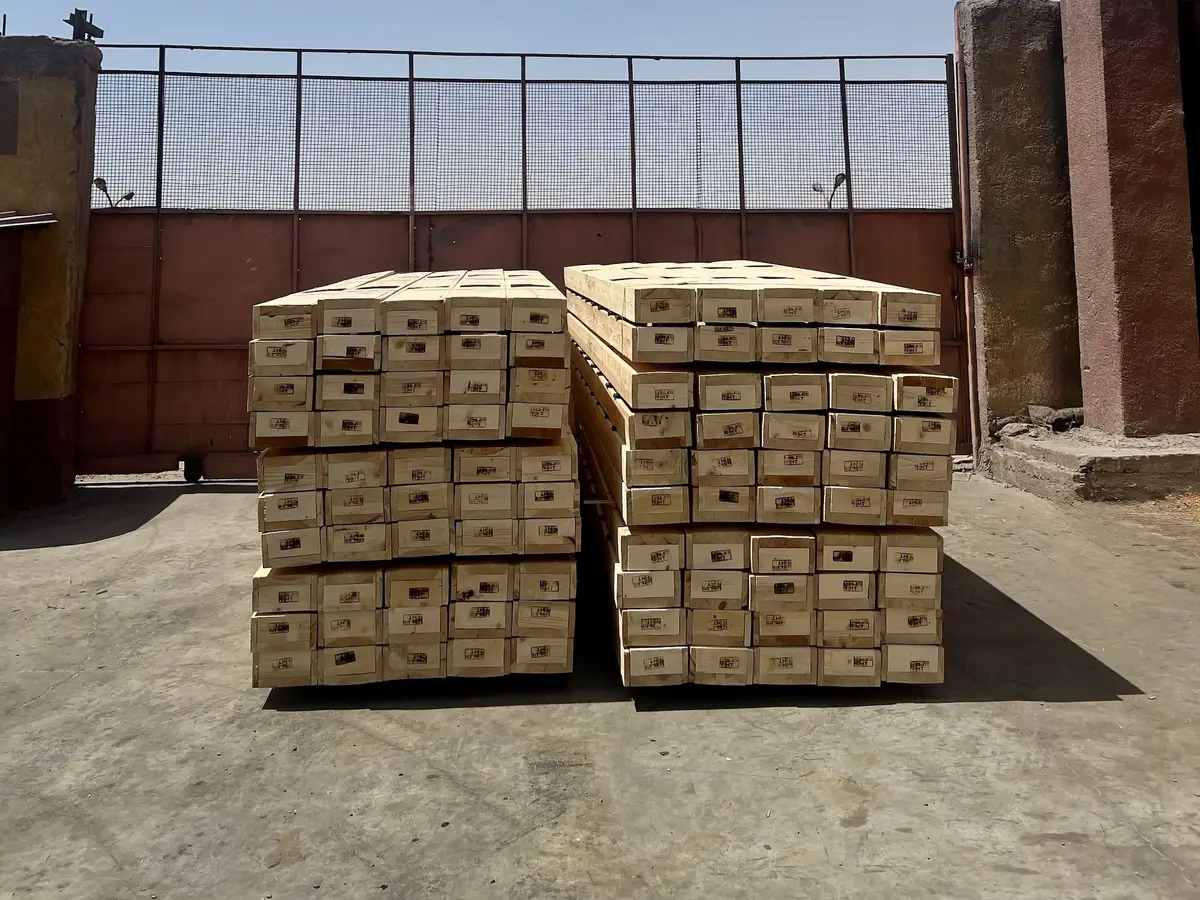
Choosing the right pallet type isn't a simple decision — it's a direct choice that impacts shipping costs, product safety, and warehouse efficiency. In this guide, we detail the difference between the two main types: Block Pallets and Stringer Pallets.
1. Block Pallets
Block pallets rely on solid wood blocks distributed at nine points between the top and bottom decks. This design gives the pallet a very high load capacity and allows a forklift to enter from all four sides with ease. Browse our block pallets.
Advantages of Block Pallets
- Four-way entry: Forklifts can enter from any side, speeding up loading and unloading.
- Higher load capacity: Typically suitable for heavy loads such as petrochemical and chemical products, depending on the block and deck specifications.
- Excellent structural stability: The blocks distribute pressure evenly across the entire pallet base.
- Compatible with automated systems: They work seamlessly with most modern automated racking and warehouse systems.
Disadvantages of Block Pallets
- Higher manufacturing cost compared to stringer pallets.
- Relatively heavier weight, which can impact long-distance shipping costs.
2. Stringer Pallets
Stringer pallets rely on three longitudinal wooden stringers that connect the top and bottom deck boards. They are available in two types: 2-way entry, where the forklift can only enter from two sides, and 4-way entry, after adding side notches. Browse our stringer pallets.
Advantages of Stringer Pallets
- Lower cost: Generally cheaper to manufacture than block pallets, which can make it a more economical choice for large volumes.
- Lighter weight: Suitable for agricultural and food products that do not require heavy loads.
- Wide availability: International standard sizes are commonly available, though stock may vary depending on order volume and lead time.
Disadvantages of Stringer Pallets
- Lower load capacity compared to block pallets.
- May not be compatible with some specialized automated racking systems.
Quick Comparison Table
| Criteria | Block Pallet | Stringer Pallet |
|---|---|---|
| Entry Directions | 4 ways | 2 or 4 ways |
| Load Capacity | Excellent | Good |
| Cost | Higher | Lower |
| Weight | Heavier | Lighter |
| Best for | Heavy loads, petrochemicals | Agriculture, ceramics, general export |
Wood Blocks: Solid or Compressed?
Specifically in block pallets, the blocks can be made from solid wood or Compressed Wood. Compressed Wood provides uniform density, greater moisture resistance, and is more eco-friendly. EL-Saady Company manufactures both types according to client specifications.
Conclusion
There is no absolute "best" type — the best is what suits the nature of your goods, your industrial sector, and your budget. If you are unsure, contact our Team and we will help you choose the exact specification suited to your needs.